WHO IS IT FOR?
Is this relevant to your operation?
For manufacturers looking to improve equipment, workflows and collaboration together – involving production, maintenance and management.
GRO / 04
The machine is running, yet material is queuing. Settings change between shifts. An analysis exists, but daily work stays the same. GRO System™ connects root-cause analysis with technical work, clear routines and hands-on involvement of your team.
Prepare an email enquiry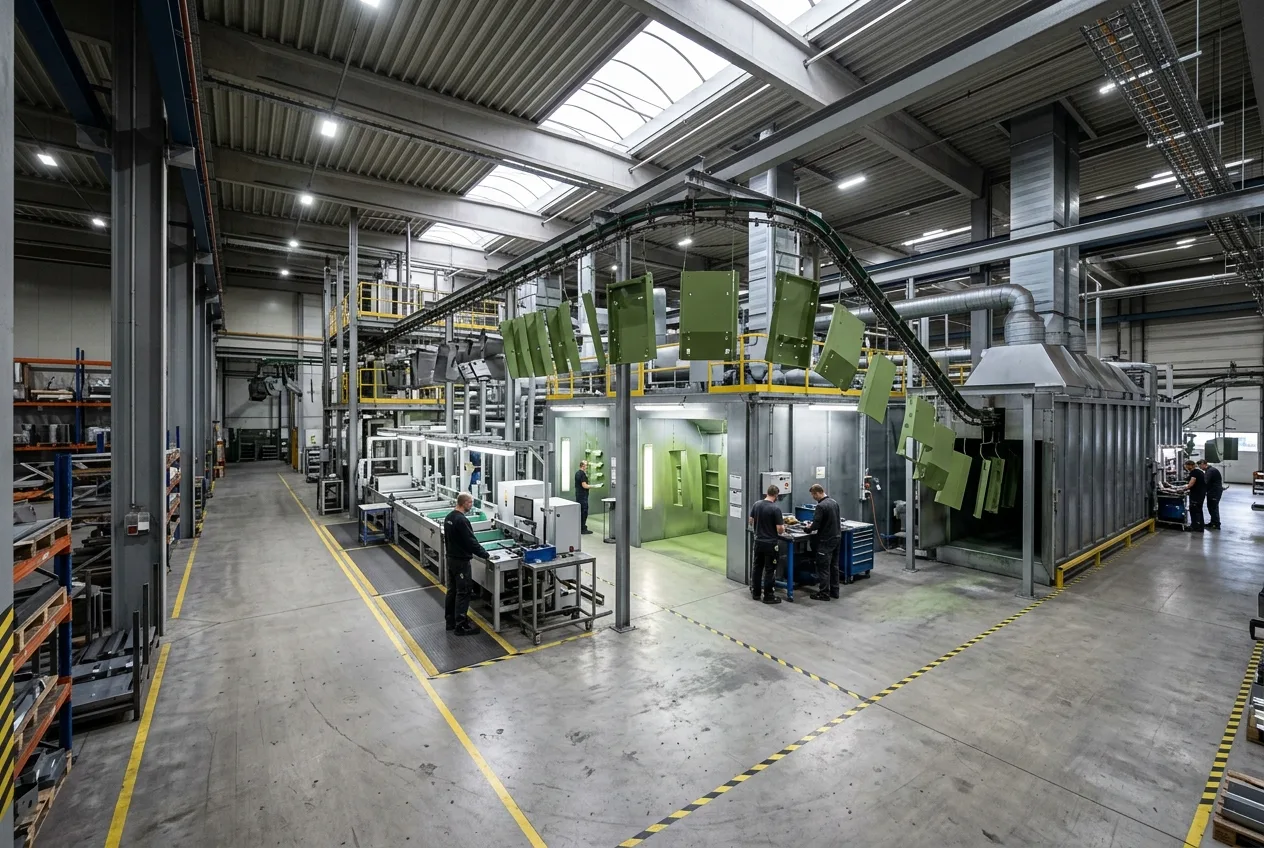
ON THE SHOP FLOOR, WITH YOUR TEAM
A large part of GRO System™ takes place directly on the shop floor, together with your people. Production is not stopped and runs as normal. Downtime is planned only where repairs, fault removal or servicing require it.
We work with your team: explaining the process, how the machines work and how they depend on each other. We solve operators’ real problems – those that cannot be seen from a desk, and those that have existed so long that “that’s just how it’s done on this machine”.
This reduces resistance to change, because your people become part of it. Safety, process understanding, quality, stability and production pace improve.
STARTING SITUATION
WHO IS IT FOR?
For manufacturers looking to improve equipment, workflows and collaboration together – involving production, maintenance and management.
TYPICAL SITUATIONS
AT THE OVEN. ON THE LINE. IN THE PLANT.
Connect bottlenecks, equipment condition, material flow and operator knowledge. Test changes on the line and embed them in everyday work.
A Gemba Walk, SIPOC or value-stream map (VSM), OEE baseline and relevant KPIs establish the starting point. Assess 5S workplace organisation and quality, environmental and occupational-safety risks. Agree goals, measures, priorities and participation with the operation.
Compare machines, workstations and processes with documentation and manufacturer data. Investigate actual performance limits, protective functions and disturbance sources. Establish emergency and deviation procedures, monitoring points and an initial annual TPM framework; Risk can deepen this part.
Connect cleaning and regeneration, agreed defect correction and fine adjustment with product specifications and actual process needs. Review speed, pressure, feed, temperature and sensor values. Mechanical, electrical or logic changes require appropriate responsibilities, approvals and an agreed assignment.
Test existing and new procedures. Record quality and functional checks following interventions; create initial work instructions, checklists and TPM plans. Compare target and actual conditions. Controls begin here and develop throughout the project.
Trial routines at the machine together and address bottlenecks and unnecessary movements. Consider vision, physical capacity and actual operating conditions. Revise step-by-step instructions and checklists, introduce initial early-warning points and test them with the team.
Introduce deviation responses, responsibilities and autonomous process control into daily work. Connect short PDCA cycles, 5S, layout changes and agreed fine adjustment. Check quality, changeover time, availability, scrap and throughput against the baseline.
Hand over final standards, checklists and TPM plans. Revisit risk points, compile a before/after report with indicators and photos and prepare onboarding for new employees. Plan further development using a Lean/TPM roadmap.
GRO SYSTEM™ · THE MISSING LINK
Between a recommendation and a working routine, questions often remain: Who owns the task? Which setting fits? How does the team recognise a deviation? GRO System™ brings these questions into one shared approach.
Bring operator knowledge, management goals and clear responsibilities into work on the process.
Consider equipment condition, settings and maintenance routines together – where wear, stoppages or variation occur.
Align machine parameters, material flow and work steps. How the technology is used day to day becomes part of the task.
Bring observations, measurements and agreed indicators together to establish clear priorities for implementation.
Test agreed changes with the team, document them and embed them in work instructions, checklists and training.
Everyone in the plant sees a different part of the same machine. Maintenance makes sure it runs. The operator makes sure the plan is met. Quality watches the product, the shift supervisor the people and deadlines, management the costs. Each of these views is valid, but on its own none gives the full picture. GRO brings them together at one workstation and looks for a solution that works for everyone. This often makes it possible to clearly improve how a department or machine works – without investing in new equipment.
An agreed roadmap connects diagnosis, technical work, standards, operator training and effectiveness checks. It typically takes 1 to 3 months; exact duration and goals are agreed for the operation.
When internal capacity is limited, cleaning, regeneration, TPM-Light, training and inspection plans can be included as hands-on work.
Follow-up checks, new-employee training and further technical or organisational improvements support development after completion.
GRO / HANDOVER
You receive an implemented and documented working system: equipment aligned with the process, tested workflows, trained operators and defined control points. Effects are assessed against agreed indicators; no fixed percentage gain is assumed.
After the project, your operation keeps:
No. It covers machine condition and parameters, material flow, changeovers and maintenance, through to standards, training and actual implementation in the operation.
No. Clean, Check360 and Risk can be included selectively. Content, sequence and participation depend on the starting point; there is no mandatory chain or blanket promise of results within a fixed time.
FROM FINDINGS TO HANDOVER
Define the process, recurring issues and target. Agree indicators, responsibilities and project scope.
Test changes in the actual process, record observations and coordinate with production, maintenance and management.
Compare results with the baseline. Match standards, training and follow-up to how work is really done.
WHAT STAYS WITH YOUR TEAM
An agreed action plan, documented changes, operating and maintenance standards, and a review against the selected indicators.
GRO System™
Describe the process, recurring losses and intended change. Include existing analyses and indicators.