Delivered by the GRO team
GRO carries out the agreed cleaning, inspection and functional checks. Your operation provides access, equipment information and a responsible contact. You receive a documented handover with findings and recommendations.

GRO / 01
Coating dust, hardened residue and contaminated air passages are part of an oven’s technical condition. GRO Clean™ combines cleaning of curing ovens for painted parts with inspection, agreed maintenance and a documented handover.
Prepare an email enquiry TWO DELIVERY MODELS ↓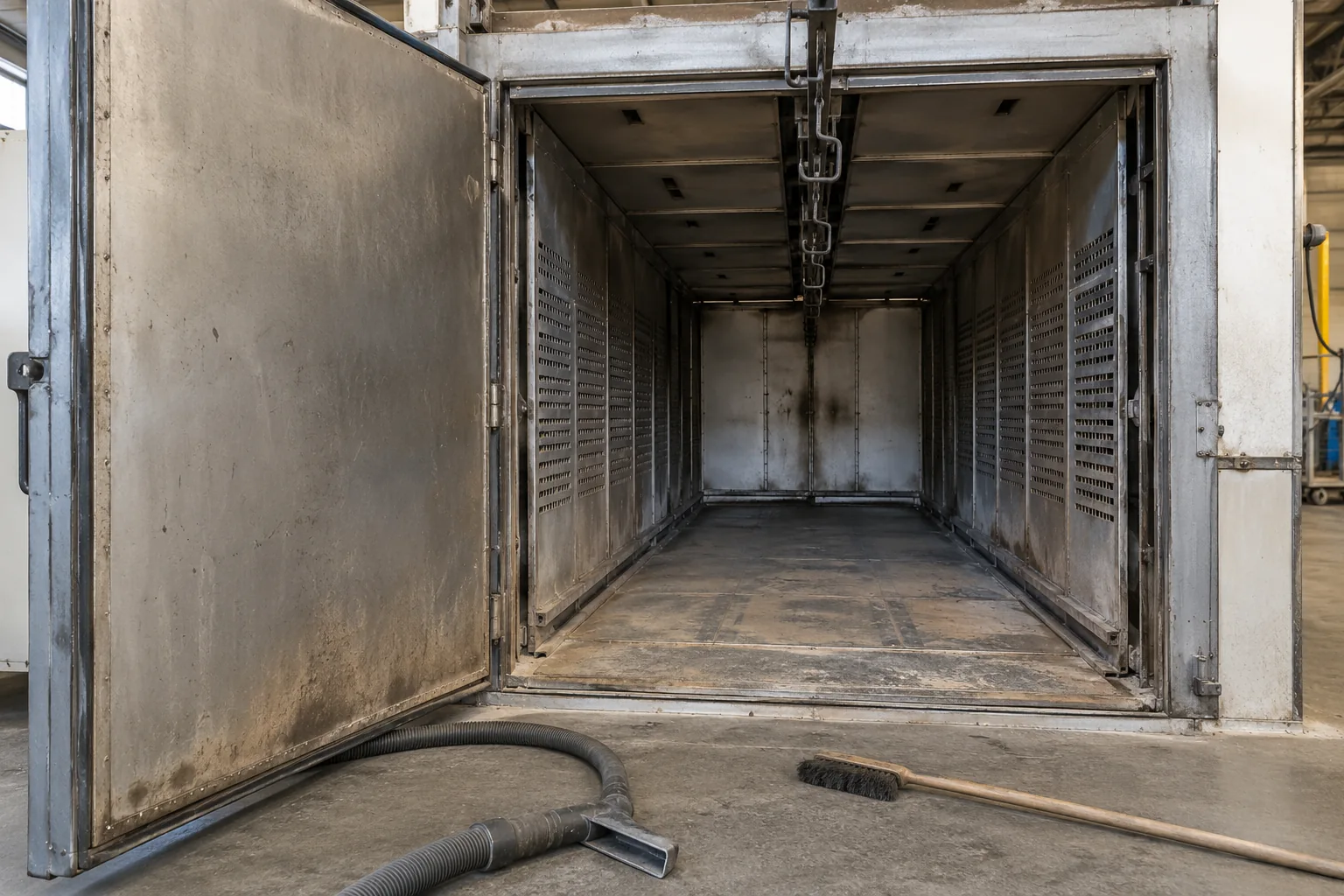
TWO DELIVERY MODELS
Two ways to deliver technical oven cleaning. People, responsibilities and the work window are agreed before the visit.
GRO carries out the agreed cleaning, inspection and functional checks. Your operation provides access, equipment information and a responsible contact. You receive a documented handover with findings and recommendations.
GRO works alongside your people at the equipment. We demonstrate the method, practise the steps together and explain inspection points and how to handle findings. Your team learns by doing how to carry out cleaning and checks.
Working alongside your team has a direct effect on the quality and pace of later production. Your people gain a better understanding of the process, the design and operation of the oven, and how equipment condition affects coating quality. They recognise deviations sooner and know how to respond to problems before defects or downtime occur.
The joint model includes time for learning and practice, so it may take longer. Checklists and subsequent TPM routines are agreed within the scope.
STARTING SITUATION
WHO IS IT FOR?
For manufacturers using curing ovens for coated parts, and the people responsible for production and maintenance.
TYPICAL SITUATIONS
AT THE OVEN. ON THE LINE. IN THE PLANT.
Clean curing ovens, clear air passages and identify wear. Delivered by GRO or together with your team, with practical knowledge transfer.
Identify oven type, parts, contamination and access. Cool the oven, mark the work area and agree the work with the responsible plant personnel. Remove covers, deflectors, grilles and necessary transport components according to the documentation. Protect sensors, actuators, wiring and electronics; record the condition and damage of removed parts.
Remove burnt-on carbon, baked deposits, coating dust, dust and oily residue using methods suited to the material and equipment condition. The focus is the oven chamber itself: walls, ceiling, floor, corners and air-guide elements. Fans and fan blades are cleaned where access and oven design allow; the scope is set after inspection on site. Cleaning also provides inspection access: damage exposed beneath deposits is recorded.
Lubricate moving parts and guides according to the maintenance plan. Check chain tension, trolley-guide geometry and free movement of hangers. Assess seals, hinges and latches; identify leaks and wear and carry out agreed maintenance. Replacement parts and larger repairs are agreed following the findings.
Remove fine residue after the main cleaning, degrease suitable surfaces and vacuum walls, floors, corners and accessible ducts. Air-path covers and difficult areas form part of the agreed scope.
Clean accessible top, sides, rear, fastenings and hinges. Vacuum or suitably wet-clean the floor within the agreed work radius. Review joints, cable/pipe penetrations and technical openings as possible sources of renewed contamination; agree sealing according to suitability and approval.
Check correct reassembly of all removed components. Compare heat-up behaviour and temperature distribution with the required values; inspect doors, seals, ventilation and transport. Consider air circulation, pressure and rotor-blade condition. Temperature measurements in agreed zones and, where needed, dynamic vibration measurements belong in the test plan.
Combine before/after photographs and agreed video recordings, work records, findings and outstanding defects. Record recommendations for maintenance, cleaning and prevention. Review work and agreed functional checks with the responsible person and confirm handover in the record.
Develop critical inspection points and simple visual standards with operators. Establish daily, weekly and monthly checklists and appropriate control cycles through quarterly planning. Colour codes, symbols, 5S rules and deviation-response routes turn a one-off cleaning into a repeatable routine.
GRO / HANDOVER
You receive a cleaned and inspected oven area with a traceable condition, documented work and a basis for the next operating and maintenance cycle. Agreed tests show what was checked and what remains open.
No. Airflow, transport mechanics, lubrication, seals, functional tests and prevention form the technical approach. Scope and measurements are selected for the particular oven.
Curing ovens for painted parts, not metallurgical melting furnaces. Industrial washing systems and other equipment are additional maintenance areas whose scope is described and agreed separately.
FROM FINDINGS TO HANDOVER
Clarify oven type, contamination, access, downtime window and responsibilities. Choose the delivery model during planning.
Clean and inspect the agreed areas. Discuss additional damage or work before extending the assignment.
Document checks and handover. In the joint model, practise inspection points and working methods with your team.
WHAT STAYS WITH YOUR TEAM
Photographs and agreed video recordings, a record of completed work, identified defects and recommendations for cleaning and maintenance. In the joint model: hands-on instruction and agreed checklists for your team.
GRO Clean™
Email the oven type, observed deposits, access conditions and preferred work window. Tell us whether GRO should carry out the work or your team should participate.